

The Record Is Not the Record
- May 31, 2026
- PetersenLegal
- Comments Off on The Record Is Not the Record
The Future of Truth in Healthcare Litigation
For more than a century, lawyers have relied on a simple assumption. The medical record is the story. If you obtain the chart, review the entries, and follow the timeline, the facts will reveal themselves.
That assumption no longer holds. Not because medicine has changed. Because records have.
 Today, healthcare exists inside vast electronic ecosystems—interconnected platforms, databases, audit systems, messaging tools, artificial intelligence applications, and documentation software that generate, revise, store, and transmit information far beyond what ultimately appears on a printed page. The modern medical record is no longer a record.
It is a report. A snapshot. A curated output from a much larger system. And therein lies the problem.
Because when lawyers, judges, juries, and even healthcare providers review a chart, they often assume they are seeing the whole story. Increasingly, they are not.
What the Paper Does Not Show
Every electronic health record contains a hidden architecture. Beneath the progress notes and physician orders are layers of information that most people never see:
- Revision histories.
- Audit trails.
- Metadata.
- Access logs.
- Time stamps.
- Canceled orders.
- Archived records.
- Deleted entries.
Digital footprints documenting who touched a record, when they touched it, what changed, and what existed before the change occurred. This information rarely appears in standard productions. Not because it does not exist. Because no one asked for it. Or worse, because no one knew it existed.
For decades, discovery in medical negligence litigation has focused on the chart itself. But the chart is increasingly becoming the least interesting part of the record. The story now lives beneath the surface.
The Inspection
Years ago, Susan Petersen began asking a question few lawyers were asking:
What exists inside the system that never makes it onto the page?
The answer required something unusual. Rather than accepting the records that had been produced, she began pursuing court-ordered inspections of live electronic health record systems themselves. Not the printout. The system. The database. The architecture behind the chart. The results have been startling.
In one recent case, a court-ordered inspection uncovered 845 pages of medical records that had never been produced in discovery. Those records had existed within the healthcare system the entire time. They were available to authorized users. They simply never appeared in the production provided to the patient.
The court ultimately imposed sanctions exceeding $221,000.
The sanction mattered. But the lesson mattered more. Because the inspection revealed something larger than a discovery dispute. It revealed a truth about modern evidence. The system knew more than the discovery production of the record showed.
A New Age of Evidence
For most of legal history, evidence was tangible. A contract. A letter. A chart. A photograph. Today, evidence is increasingly invisible.
It exists in metadata. In audit logs. In revision histories. In machine-generated records. In electronic pathways that leave no visible trace unless someone knows where to look. And the challenge is only growing.
Artificial intelligence is beginning to transform clinical documentation. Ambient recording systems generate notes before physicians sign them. Third-party vendors create and store information outside traditional electronic health records. Messages disappear. Drafts vanish. Systems overwrite themselves.
The distance between what happened and what survives grows wider every year. The legal profession is only beginning to understand the implications.
Beyond Litigation
This work is no longer simply about medical negligence cases. It is about transparency. Accountability. Data integrity. Trust. The questions raised by electronic health records reach beyond any individual lawsuit. They touch every institution that relies upon digital information. Every healthcare system. Every regulator. Every patient. Every lawyer.
The central question is remarkably simple:
Can a system be trusted if no one can verify what it contains?
For Susan Petersen, that question has become a defining area of inquiry. Through litigation, writing, speaking, and interdisciplinary work involving healthcare technology, artificial intelligence, and electronic evidence, she has become part of a growing conversation about what truth looks like in a digital age.
The conversation is still evolving. The technology is changing. The standards are still being written. But one lesson has emerged with remarkable consistency.
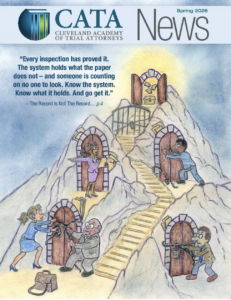
Every inspection reveals the same thing. The system holds what the paper does not.
Looking Forward
The future of healthcare litigation will not belong to the lawyer who reviews the most records. It will belong to the lawyer who understands how records are created. How they move. How they change. How they disappear. And how to find what was never produced in the first place.
Because the question is no longer whether critical information exists beyond the printed chart. The question is whether anyone knows where to look. The printout reflects a query.
The system reflects reality.